After Katrina, Louisiana Spoke Up: Did We Listen?

post-detail-image
January 20, 2026

Blog


The Center for Planning Excellence was founded in January of 2006, less than 6 months after Hurricanes Katrina and Rita wiped out communities across Louisiana’s coast. As CPEX celebrates its 20th anniversary, we’re reflecting on the work that defined our beginning and continues to shape our mission today. 

In the aftermath of Hurricanes Katrina and Rita, Louisiana faced devastation on a scale few could have imagined. Thousands perished, hundreds of thousands were displaced, and questions loomed over not only how to rebuild, but how to build back stronger. Out of that moment came Louisiana Speaks, a landmark regional planning process led by the newly formed Center for Planning Excellence (CPEX).

 
  Louisiana Speaks illuminated the critical need for planning in a state at the intersection of immense challenges—population movement, environmental impacts, and deep socio-economic inequities.
 

Katrina and Rita magnified the vulnerabilities created by decades of insufficient planning and misaligned resource management. Today, as CPEX marks 20 years, we have an opportunity to assess how far we’ve come since Louisiana Speaks and accelerate progress on parts of the plan that remain vital to Louisiana’s future. 


A Foundational Shift


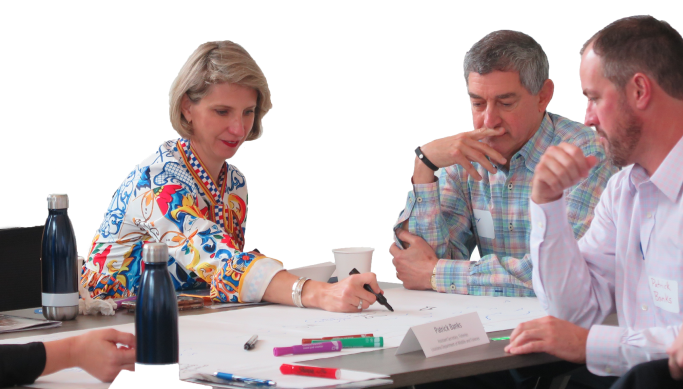
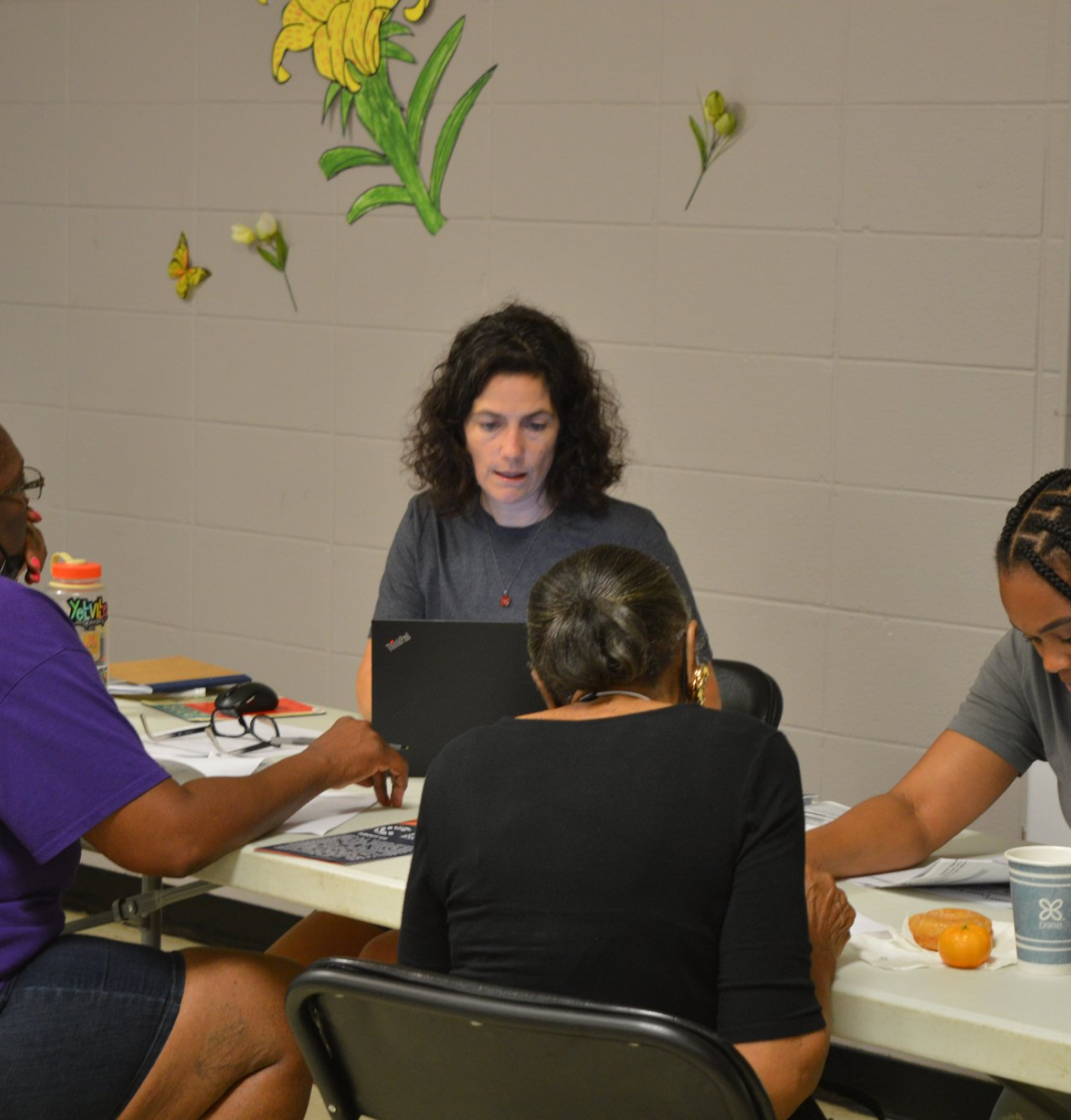
The scale of Louisiana Speaks was unprecedented. More than 27,000 residents—spread across shelters, temporary homes, and cities as far away as Houston and Atlanta—lent their voices to shape the plan. Elizabeth “Boo” Thomas, Founder & President Emerita of CPEX, helped lead the effort. “We set up tables at universities, outside of Walmarts, anywhere we could reach people,” she recalled. “The most important thing we asked was, do you value property rights more, or reducing community risk? Eighty percent said reducing risk. That kind of consensus was unheard of.”

Donna D. Fraiche, the inaugural Chair of the Long-Term Community Planning Committee and a member of the Louisiana Recovery Authority appointed by the late Governor Kathleen Blanco, remembers the process as both grueling and healing. “In many places, the devastation was so complete that any assistance we could provide to the people and victims of this terrible time was limited to dreaming of a new reality and future,” she said. “The process itself became part of the prescription for healing a suffering state.”

 
  At its core, Louisiana Speaks set out three goals: Recover Sustainably, Grow Smarter, and Think Regionally.
 

It called for investment in existing towns, mixed-use walkable communities, multimodal transportation, adequate housing supply, better storm and flood management, and protections for Louisiana’s unique culture. Louisiana Speaks paved the way for a community-driven planning renaissance in the state. 

Catherine Heitman, then communications director of the Louisiana Recovery Authority, remembers the optimism. “I learned what ‘smarter’ investments could mean to daily survival,” she explained. “Particularly funding for transportation that would give residents a choice of ways to get around—by vehicle, bicycle, foot, or modern mass-transit systems. The need is as real as ever today.”


A Blueprint in Action


Louisiana Speaks was more than a report—it was a framework that influenced major policy shifts as well as the formation of the Coastal Protection and Restoration Authority (CPRA), which combined disparate state functions into a single agency responsible for developing the nation’s leading coastal master plans. Stronger building codes were adopted statewide. Projects like the Lake Borgne Surge Barrier, modeled after Dutch flood protection, took shape to defend southeast Louisiana from future storms.

Paul Rainwater, who served as executive director of the Louisiana Recovery Authority in the wake of Hurricanes Katrina and Rita, emphasized how essential the plan was in securing federal support.

 
  “Without Louisiana Speaks, we would not have convinced Congress to allocate the billions we needed. Building higher and stronger was not part of the national conversation in 2005. Louisiana made it part of the conversation.” — Paul Rainwater
 

At the community level, implementation was uneven but impactful. Lake Charles, for example, wove Louisiana Speaks strategies into its downtown redevelopment and lakefront projects, giving the city stronger footing in the face of later storms like Laura and Delta. “That’s a shining star of what adoption looked like,” Rainwater said. But he also warned that affordability—whether of housing or insurance—has too often driven decisions at the expense of good planning.


Gaps and Stalled Progress


Still, not all of the plan’s vision has been realized. Rainwater pointed to the 2016 floods as evidence: some communities had implemented strong land use and resiliency strategies, while others had not. “It’s no longer just hurricanes,” he said. “Intense storm events with no name are overwhelming us. Prevention and preparedness have to become the norm.”

Mark Davis, then executive director of the Coalition to Restore Coastal Louisiana, echoed that theme. “Being taught a lesson is not the same as learning it,” he said. “We’ve made progress in some areas, but much of it was the least we could do to get by—like adopting building codes because the insurance industry forced us to.”

Camille Manning-Broome, CEO and President of CPEX, reflected that the biggest gap isn’t a lack of solutions, it’s willpower.

 
  “We know what needs to be done, but for a myriad of reasons, we have not summoned the collective will. The cost of inaction is unaffordable, yet the opportunity to become stronger, safer, and smarter is well within our reach. It’s up to us to seize it.” — Camille Manning-Broome
 

Fraiche agreed that human nature and political shifts have made progress uneven. “The willingness to succeed often wavered during life transitions,” she reflected. “Improvements weren’t always sustained. We’re constantly faced with challenges that threaten us after each disaster.”

And while Heitman applauded strides in transit, she noted that acute gaps remain in rural communities. “Almost three in ten Louisianans live in rural areas, many without vehicles,” she said. “That’s why continued investments and planning that include all residents are essential.”


Wins Worth Celebrating


Despite uneven progress, there are tangible wins to lift up. Thomas pointed to greater public awareness. “Normal, everyday people now understand that development patterns affect them directly,” she said. “That awareness didn’t exist before Louisiana Speaks.” Rainwater stressed the cultural change among state leaders.

 
  “Every governor since Katrina has taken emergency preparedness seriously. That wasn’t true before.” — Paul Rainwater
 

While Davis highlighted institutional reforms like the merging of coast protection and restoration as a move that made us fundamentally smarter about managing our future. 

Some of the plan’s successes were less visible but no less significant. Thomas pointed to the adoption of the International Building Code, which Louisiana had resisted prior to Katrina. “Because of Louisiana Speaks and the Recovery Authority, the legislature required stronger codes for all new construction,” she explained. “When Gustav and Isaac hit just three years later, the new buildings held. That was a direct result of the plan’s influence.”

Another notable win was the founding of CPEX, Louisiana’s first non-profit land-use planning organization.

 
  “Louisiana Speaks was just a plan. But with the momentum generated by that plan, CPEX built a planning movement in Louisiana.” — Camille Manning-Broome
 

More recently in 2022—building on more than 15 years of experience since Louisiana Speaks— CPEX partnered with the state to establish a section within the Office of Planning and Budget (OPB) dedicated to long-range planning and interagency coordination, marking a significant milestone in Louisiana’s commitment to proactive decision-making.


Are We Stronger, Safer, Smarter?


So, twenty years later, where does Louisiana stand?

  • Stronger: In addition to institutional reforms, Thomas sees change in how ordinary people engage. “Citizens now show up at council meetings and demand better practices,” she said.

  • Safer: Stronger building codes and surge protection make many places safer. “Preparedness is taken seriously now,” Rainwater said, though he warned the cost burden is shifting to local communities.

  • Smarter: On this point, perspectives were mixed. Interviewees agreed that Louisiana has made strides in preparedness, but many worried about backsliding. However, most agreed that being smarter means institutionalizing lessons learned—investing early, planning thoroughly, and protecting decision-making from short-term politics—rather than relying on chance.


The Path Forward


Louisiana Speaks was born of tragedy but grounded in hope. Its success was not just in the policies it seeded, but in the voices it elevated. Thomas remembered it as a moment of rare consensus: “For the first time, people all across Louisiana said reducing risk mattered more than anything else.”

Two decades on, the question lingers: Did we listen? 

The answer, according to those who lived it, is partly. Louisiana has grown in important ways, but progress is uneven and fragile. As Manning-Broome put it, “The strategies in Louisiana Speaks are still relevant. What we need now is the will.”

To fulfill the vision set out in 2006, leaders and communities must once again summon the will to act—not after the next storm, but now.

 
  Twenty years later, CPEX remains poised to weather Louisiana’s storms—united and prepared—with an unwavering commitment to the state we call home.
 

More from the Blog